All You Need To Know About Roof Felt Paper

October 1st, 2011

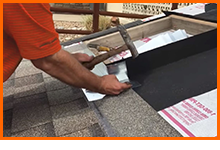
Roof felt paper is an amazing topic. Well really it isn’t. Even so there is a fair amount to be learned about it, and if you have some roof work coming up then it can only help to know as much about any and all of the materials that you’re going to be using. That of course would include roofing felt paper.

Roof felt paper is primarily used as an underlayment base layer.

Now your first little snippet of information here, is that there is a difference between roof felt paper and tar paper. They’re two entirely different products.

Tar paper you see, is actual craft paper that’s been impregnated with asphalt. It’s used for things like siding and flooring underlayment for a thinner vapor barrier.

Roofing felt paper, on the other hand, is much thicker and heavier. It’s the big black roles that you can see standing or laying next to the bundles of shingles on a roofing job that’s been loaded. While thinner tar paper is made from a higher grade craft paper, roof felt paper is made primarily from recycled cardboard and has a noticeably rougher texture.

The most commonly used roof felt paper product is known as #15. Now it used to be called “15 pound” because the amount that it took to cover a square, a 10′ x 10′ area was 15 pounds. Today however, its made thinner, and generally weighs between 12 and 13 pounds per square. Hence the name change to #15.

Always store standing on end.

Up from there is #30 roof felt paper, and just like #15, it too has also undergone a name change for the same reasons. You guessed it. It used weigh 30 pounds per square but now depending on which grade you buy, it can weigh anywhere between 16 and 27 pounds per square.

Number 30 roof felt paper is obviously noticeably thicker and is primarily used on wood shake roof’s. It’s applied inter-spaced between the layers of shakes and functions to help shed water. Number 15 on the other hand, other than when it’s being used on a hot tar roof, is primarily laid down as a base layer to function as a vapor barrier.

Always store roofing felt paper standing on end on a clean surface to keep the roles from going flat. It doesn’t damage their integrity when they go flat. It just makes them very difficult to roll out on the roof if the roles aren’t round. Then if you’re planning on using your roof fell paper on a hot tar roof you need to cover them with plastic to keep them dry.

Then another little-known fact about roof felt paper, is that it used to be made with asbestos, and it really wasn’t all that long ago when they stopped. Just a handful of decades back. So what this means, is that if you have an old composition shingle roof to tear off that’s two or three old roof layers deep, then chances are pretty good that at least the bottom layer was laid down with old-style asbestos roofing felt paper.

Roofing Safety: Get To Know The Danger Zones

September 23rd, 2011

OSHA now places roofing safety just below coal mining and commercial fishing in terms of danger. Yet at the same time homeowners everywhere who would never dream of heading into a coal mine or out into the ocean on a fishing boat, think nothing of climbing up on their roof.

It’s the familiarity here that tends to foster a false sense of security. You see your roof every day, so over time that can be enough to get you to let your guard down.

Let there be no doubt about it though but paying a contractor to the climb up there and do some patchwork for sure isn’t cheap because some of them are now charging upwards of $150-plus per hour.

So the incentive is definitely there for doing your own work, so as long as you know where the majority of injuries occur and how to prevent them you can cut the risk factor considerably. Just don’t forget though, that in roofing safety always comes first.

So the first element of danger that you’re going to encounter isn’t even up on the roof. It’s down on the ground when you’re first handling your materials. That is unless everything has already been loaded for you.

You see, “everything” in roofing is heavy, so the risk of screwing your backup if you’re not used to physical labor is big. So prevention is key here, and it comes in the form of a well fitting elastic back support system, along with good dose of common sense when you’re hefting loads.

Then another major danger zone is on your way up to the roof. It’s the ladder because in fact OSHA lists ladder falls as the “number one” source of injuries on construction sites. Then when it comes to roofing safety, it’s worse when you’re carrying loads up the ladder.

Also what you may not realize here, is that the majority of ladder injuries occur with falls from no higher than 3 feet. So only use well functioning ladders that are securely positioned.

Then once you make it up onto your roof, if you’re like most people your first major concern is falling off it. Particularly if it’s a two-story home.

The truth though, is that if you’re using a compressor with pneumatic air guns, it’s those guns that you stand the greatest chance of being injured by. Particularly if you’re inexperienced with them, the odds of getting a nail or staple into your hand is extremely high. Now your eyes can be covered with goggles, so wearing them at all times is pretty much common sense.

However, when it comes to the risk of ending up with a nail or a staple shot in your hand, there really is only so much you can do because air guns are “just inherently dangerous”.

So the best advice you can get, is to handle them carefully, and to be aware that the faster you go with an air powered nail gun, the higher the risk of injury. The good news here though, is that every seasoned roofer has shot himself at least once, and taking a nail or staple to the hand, although quite painful, is not life-threatening.

Then your last roofing safety tip involves determining the risk of falls from your roof, and it’s really relatively simple to figure out. That’s because the steeper your roof is, the greater the risk, with a flat roof having the lowest risk factor, and a 12 and 12 pitched roof having the highest risk.

Generally speaking though, if the roof is dry and free of frost, a 6 and 12 pitch is about as steep as you can get, and still walk on it unassisted with with a reasonable degree of security.

The bottom line here, is that you to need approach the job from the very beginning in the same way that a professional roofing contractor would in terms of roofing safety. Have a meeting before you even get started, so you can talk to your help and lay out a safety policy. From the beginning, communication is key, and that holds true for the entire duration of the job, so look after the guy next to you while he looks after you.

Take a Good Look at Cast Iron Gutters

May 11th, 2011

It really can seem at times that rain gutters in general really are under-rated. People just really don’t like to think of them, let alone study them. When it comes time to deal with gutters on their home, folks in general just want someone to get up there and “do it”. Either have them installed, clean them out, or “whatever”.

So it really should come as no surprise that of all systems and components on a home, rain gutters really can be among the most problematic.

When it rains they leak and when it’s sunny and all the plants are growing, they end up choked with leaves.

Through it all though, the real irony is that high quality gutters that not only work good, but look good too can make all the difference in the world on a home.

Also a nice high quality system like cast iron gutters require very little maintenance. Maybe just a check up every five years or so.

They aren’t just good for keeping water from dripping off your roof onto your head either. Rather they’re your first line of defense against dry-rot damage at the end of your rafter tails, and along your fascias. In short, “it pays” to have a first rate system on your home.

So then of all products out there why should you even consider looking at cast iron? After all it is one of the more expensive types you can buy, and besides a seamless system sure does solve the leak problems. The simple fact is that cast iron gutters are becoming more popular, and there are several great reasons why.

First of all they are by far the most durable. Even tougher than steel gutters and when they’re painted with a good high quality primer and a good top coat, they’re impervious to all types of weather conditions. In short, they can last pretty much forever.

In fact there are cast iron gutter systems right now on older homes in Europe, Latin America and Europe that are literally hundreds of years old, and and they’re still in working order. It’s just that durable.

Now they’re not only the most durable, they “look durable” too, and there’s just no imitating the look of a solid, quality made quality product on a home. Whether it’s doors, windows hardware, or “whatever”, the look of durable and lasting quality just never goes out of style.

Cast iron rain gutters are quieter too and the next time it rains take a “good listen” at your gutter downspouts. If you have standard steel gutters you’ll plainly hear the water as it splashed through the down-pipes to the ground.

In fact you may not know this, but if you live in a quality built home, you already have cast iron drainage pipes inside your walls.

It’s used in place of plastic in better built homes for that one simple reason. That is that it’s so much quieter when water flows through it.

Then in the end, cast iron is recyclable and in this age when people are looking for more ways to make home building more environmentally friendly, this is but one. You see, no building lasts for ever so some day “every home” will have used up its service life.

The fact is that the longer that takes, the more it’s important that you use recyclable materials today. One hundred, two hundred, or even three hundred years from now, virtually anything that can be re-used from a demolished building will be.

Roof Repair Products for Roof Leak Repair: Get to Know them

April 6th, 2011

No doubt about it but that someday your roof is going to leak. So you will eventually be dealing with roof leak repair issues and what type of roof you have determines how soon that will be. Even metal roofs do eventually wear out, although if you have one, due to its incredibly long service life you may no be alive when it happens.

None the less, someone someday will need roof repair products for it.

So the fact is that if you have a roof, it will eventually end up dying a slow death and it begins with some minor leak that in many cases a home or business owner will just put up with. A little annoying trickle or drip that pops up every time there’s a heavy rain.

A little puddle on the floor, or stain on the ceiling that slowly grows in size as time passes by.

In time though, your roof leak repair issues will increase to the point that you can no longer avoid them.

So now is the time to become familiar with roof repair products, and in fact if your roof is old and starting to to show its age, you may want to get ready for roof leak repair work now. Buy what you need and store it away, so the moment your roof springs a leak, you’ll be ready, and will be able to minimize the water damage.

Mastic


Now if you’re like most folks out there, the first picture that comes to mind when you hear the words “roof repair products”, is roofing mastic. That messy, black asphalt based goo that you can buy in one or five gallon tubs down at your local hardware store.

Now the stuff works great if you know how to use it, and if the particular roof leak repair issue calls for it.

You see, mastic is excellent for small spot patches and for sealing around pipes, drains, and things like that, but when used alone it does have some inherent problems once you start to do larger roof leak repair jobs with it. For instance once it cures, it’s prone to cracking.

Three Coursing

So professional roofers use mastic in a system that they call “three coursing”. A method that allows them to get the benefits of this relatively inexpensive asphalt goo on larger areas, yet avoid the cracking after it cures.

Three coursing begins with a nice, “not too thick” layer of mastic over the area to be repaired. Then the next step is to push down and “work in” a sheet or two of fiberglass roofers mesh, followed up by the final layer of the three course, which is a top coat of mastic.

Torch Down Roofing

Now another one of the popular roof repair products that you may not know about is called torch down roofing, and the reason that you may not have yet heard about it is that it really isn’t marketed for roof leak repair. It’s primarily used for new flat roofs.

Even so, for larger roof leak repair issues where whole flat sections have to be addressed it’s a fantastic option. It’s sold in rolls and looks just like 90 pound, mineral coated cap sheet. Only with one big difference.

That difference, is that it comes with a thick layer of rubberized asphalt on the underside of it.

It’s simply heated with a gas blow torch that the roofing supply house will have on hand and let you use for free then rolled out over a degraded area, to in effect form a new roof. Now it sounds a lot more dangerous than it actually is.

JB Weld

JB Weld is used to repair metal and is a great for patching small holes in valley metal and gutters. It’s a two part polymer that comes in small tubes, and you can find it right down at your local hardware store.

Now leaks in valley metal and gutters can be maddening because due to the larger volume of water passing over them, even a tiny hole can be the source of a substantial leak if it’s in the right place.

Simply clean the area around it well, sand away any rust, then mix up, and dab on on a little bit of JB Weld.

Roof Leak Repair Tape

One of the most sensible roof repair products to hit the market in recent years, is roof leak repair tape, and it really is just what it sounds like. It’s essentially a heavy duty plastic tape that is held in place by a high tech, super durable adhesive.

You simply peel and stick it on over cracks, and holes.

Now do keep in mind that in the end, just like any other type of tape, it really is “only as good” as the surface you’re sticking it down to. What this means, is that it works best on smooth, clean, non oxidized surfaces like plastic membrane roofs.

Liquid Rubber

Liquid rubber is one of the more amazing roof repair products to come available in recent years, even if it is one of the more expensive. You can buy it in one gallon and five gallon containers, but don’t look for it at your local hardware store.

Instead the best place to look, is online, or perhaps at your local roofing material supply house, and this stuff is great for certain types of roof leak repair jobs. For example, leaks that are the result of water pooling in low areas on flat roofs.

The reason being, is that once it’s poured on and rolled out, it forms a completely water tight barrier that lasts up to even years. In fact this is the same stuff that’s used to seal up, and line the bottom of outdoor fish ponds.

Tin Shingles

Tin shingles are just what they sound like. They’re simply small sheets of metal sheeting that are used to solve roof leak repair issues on wood, and asphalt shingle roofs where the problem is weather degrading.

Of all the roof repair products out there, tin shingle are by far the least expensive, easiest and cleanest to use, and in fact are quite effective if installed properly. Also you can buy them or of you have some sheet metal laying around, you can easily cut your own.

There’s no nailing or gluing involved. Simply locate an area on your shingle roof where the shingles have degraded to the point that they aren’t shedding water properly, and just shove them up and under. That’s it. They then function to block, and shed the water that’s getting through.

Even You Can Operate a Tar Kettle for DIY Built Up Roofing

February 27th, 2011

No doubt about it but that there has been a whole boatload of incredible advancements in roofing in recent years. New systems and products that perform incredibly better than classic style asphalt built up roofing. Even so, from time to time a tar kettle can still be seen parked on job sites, and this is for one darned good reason.

That reason is that built up roofing is still the cheapest deal in town. Nothing fancy, or high tech here! Just good old fashioned asphalt, and felt, or fiberglass roofing material. All capped off with a layer of gravel or a thin emulsion top coat. All relatively low cost raw materials.

Now if you can just cut the roofing contractor out of the deal and rent and run your own tar kettle, the price of built up roofing drops way down. In fact if you do he math on the cost of materials and the rental on your tar kettle, you can get your overall cost down to well below $100 a square. Even less if you opt for basic felt instead of glass mat, and cap your finished roof off with gravel instead of emulsion.

Now granted, you won’t be getting the kind of service life numbers that you see with newer high tech roofing systems, but you still can get a good 18 to 20 years out of properly done felt and gravel built up roofing. In the end though, there is just one glaring problem you will have to contend with.

That problem is that you need to operate a tar kettle to do built up roofing and a tar kettle is one very “dangerous” piece of machinery. In fact operating a tar kettle is so dangerous that OSHA classifies it as being among the most dangerous jobs you can do, and the main problem is the potential for serious burns.

Understand that for proper bonding and adhesion, the tar that you will be working with has to be heated to some 450 degrees. Also understand that tar is thick and gooey, so if you get some on you it will burn for a surprisingly long time, and it also burns deep into your skin.

Sound a bit scary? Well it should, but at the same time just like a cook in a busy kitchen, expect to receive at least one minor splatter burn if you’re going to operate a tar kettle for a day. Professional roofers who do built up roofing call them “bee stings”. A small speck of hot tar carried by the breeze and landing on, say your arm to remind you that it’s some pretty “hot stuff”.

So you’re definitely going to need some safety gear and the standard set up for a “kettle-man” is leather gloves, hard-hat with full face mask, heavy long sleeved cotton shirt, heavy cotton long pants, and leather boots, or shoes. Everything has to be 100% cotton and leather because synthetic fabrics, and material will melt.

Now you don’t have to wear the complete safety garb the whole time you’re working on your built up roofing, but for sure you want to dress in your complete “battle gear” every time you lift the lid of the tar kettle for sure. You see, even if you’re not adding any cold asphalt into it, even a small breeze can carry “hot stringers”.

Setting Up the Tar Kettle

Pull the tar kettle in place where it would be most strategically suited from your roofing job, and then make sure to unhook it from your vehicle. The reason for this is you don’t want splatters on your vehicle, and also you’ll want to level it properly

Then you’ll need to fill and keep a five gallon bucket full of water as well as a full fire extinguisher handy at all times. Also keep a rag and a cup in the bucket of water to extinguish it in the event it should flash over, which is not an uncommon occurrence. “Never ever” fire it up without them!

In the event that the molten tar in the kettle should catch fire, it’s important not to panic. Simply close the lid, pour a “small cup” of water in the hatch on top of the lid and then use the wet towel to “slap down” any flames that make it outside of the lid. Ask any kettle man, and he’ll tell you that it happens at least once a week.

Still one more safety step you need to take, is to make sure that your gas lines that run to your tank are long enough to keep your gas tank a safe distance from the tar kettle. Also make sure that you have a knife handy so you can cut the gas line if you don’t have quick release connectors, and pull the tank away should a fire get out of control.

So after you’ve set up the kettle and made sure that you have plenty of paper, felt or “what ever” spread under it to catch any drips, it’s time to set up your pipe to pump hot tar up to the built up roofing job. Now just like the tar kettle itself, there are also some safety concerns that need to be addressed here as well.

Item number one is to make sure that you use a hammer to tighten the spinning connections at each coupling on the pipe “nice, and tight”. “Pound them hard”. The risk here you see, is that if a coupling is left loose, it can result in a “spray of hot tar” when the first draw is made with the pump. It’s been known to happen.

The next safety concern with the pipe revolves around tying it off up on the roof because the last thing you need is for it to come loose and fall down while your pumping from the tar kettle. Use bailing wire and tie it off well to something secure about “three times” a sturdy as you feel is necessary.

The Three Golden Rules of Built Up Roofing

Rule number one, is to (never ever) leave a “hot” tar kettle unattended, unless it has been completely shut off. Shut the gas off to extinguish the primer flame.

Rule number two, is to never let the tar kettle run dry. Once it’s dry, the heating tubes are exposed to open air, and far more prone to ignition.

Rule number three, is to follow all safety precautions like a “brainwashed robot”. People die in hot tar accidents and all it takes is for you to let your guard down once for an accident to happen on a built up roofing job.

Watch a professional roofing crew at work and you’ll see how they stay in constant communication when hot tar is being pumped from the tar kettle, or transferred on the roof. “ Heads up I’m gonna pump some hot”!! Watch it fellas I got two full buckets of hot here”!! “Heads up”!! And so it goes on any built up roofing job. It’s safety first at all times.

A Few Things Remember Before You Get Started

Open, split and stack your asphalt plugs in the cool of morning, while the tar is brittle. Once they get warm and soft, the metal bottoms stick like glue, and they’re a real hassle to split.

Gas tanks freeze up and cut output under heavy use, so make sure that you have a spare that you can switch over to. They always seem to freeze and “peter out” right when you get a good production roll going, so you’ll be glad you brought that extra tank.

Make sure that you bring two “good heavy” locks and chains to secure the “lid and drain spout” of your tar kettle when you’re through for the day. Kids are drawn to them like bees to honey. Run it low as you finish up the day and remember that leaving the lid, and the drain spout unlocked is just asking for a “disaster”. Also don’t forget to take the gas tanks home with you when you leave the job.

Never attempt to lay down built up roofing in damp, or rainy weather. The deck and matrial must be “perfectly dry” before you can start because even a slight mist will result in blistering problems on the finished roof. Cover your material with plastic in case it rains

A messy gooey tar kettle is more of a fire hazard, so warm it up and scrape the excess tar off the top if it hasn’t been done in a while.

The Bottom Line on DIY Built Up Roofing

Running a tar kettle and doing your own built up roofing isn’t rocket science, so for sure you can do it. It does take a little getting used to at first though. Now the asphalt must be heated to some 450 degrees, so it can all be a bit frightening at first. Consider renting your tar kettle a day early, so you can take it to a wide open area crank it up, and give it a test run.

Bring your water, towel, and fire extinguisher, so you can heat it up to the point where it flashes over and then go ahead extinguish it with a cup of water in the top, and a few “wet towel slaps”. This way you can see for yourself that it’s really not that big a deal, because the truth is that at optimal temperature you’re only some 75 degrees from its flash-over point.

Explore Todays Superior Concrete Roof

February 17th, 2011

Now for me, I suppose one of the biggest reasons that I never took a good serious look a concrete roof was that I really never saw one on a home. That is unless I saw some news footage about an earthquake in some far off third world country, and then what I saw wasn’t pretty. Brick and cement homes with concrete roofs tumbled in on one another, like so many dominoes.

So I suppose I was like most folks in the US, Canada or the UK, in that I just felt a lot more comfortable with a lighter wood framed roof up over my head. Just to play it safe. However, then something happened that completely changed my view of the concrete roof and that was that I visited Mexico, and finally got a good close up look at a properly built, steel reinforced concrete roof.

Every building here has a concrete roof on it.

Now before I get into how they’re built and the benefits that they offer, I want to point out a couple of things. First of all you have to understand that building codes in most all third world countries are incredibly lax and pretty much non existent on the outer perimeters of cities, and populated areas. Also steel rebar is expensive to buy. Particularly in many of these poorer areas.

What I’m getting at, is the tumbled down building with a concrete roof that you have seen so many times on TV news, is the result of lack of proper steel reinforcing. Also a light sack mix of the actual concrete that’s poured is all too often a contributing factor to structural failure as well.

Then the last thing I want you to consider regarding the structural integrity of a concrete roof, is that bomb shelters are made out of cement. Stop and think about it for a second, or two. If you wanted to build an underground bunker to survive a nuclear blast in, what would you build it out of? That’s right! You would build it out of steel reinforced concrete and you better believe that it would have a concrete roof on it for sure. Concrete when “properly reinforced” is the strongest building material you can use.

Mexican "cementeros" do amazing things with concrete.

Mexican “cementeros” (cement workers) do amazing things with concrete and all you have to do is lay your eyes on one of their precision formed in, full concrete winding staircases to make a believer out of you. You see, for one thing labor costs run substantially lower down there and as a result so many of the things that they do and build with it would be prohibitively expensive up in the US, Canada, or the UK.

At the same time, you have men in countries all over Latin America that started in working with their father or uncle on their first concrete roof when they were just kids. It’s all they know and they know it well, so a cementero in, say his mid 30s can quite commonly have some 25 or more years of forming, and pouring concrete notched on his belt.

Now a concrete roof doesn’t rot, can last pretty much forever, only requires a coat of good paint to seal it up, is completely termite proof, flame proof, and is strong enough to support a basket ball court with a full team playing on it. Also because you don’t have the toxic substances in them that you find in so many standard conventional roofs, the water that flows off of a concrete roof is pure as the driven snow.

Still on more thing that I was struck by when I would stop to watch a group of Mexican cementeros forming and and pouring a proper steel reinforced concrete roof, was how far they could span. Even with only a 3.5 inch thickness, spanning up to 18 feet seemed to be no problem, and that’s with zero underpinning support.

Still another aspect that I was struck by, was their amazing ability to incorporate decorative features like corbels and formed cement rafter tails into their work. Also building a pitched concrete roof, complete with hips and valleys was also done, although by and large, the standard flat roof seemed to be pretty much the norm.

Installing the initial rough underpinning for a pitched concrete roof form on a cement block building.

The way they form in a concrete roof in Mexico, is really quite basic. They start by decking the ceiling in then they use posts and improvised lateral underpinning to hold the deck up, and keep it from sagging. That’s it. Then of course they lay in the the rebar grid-work, electrical conduit, and plumbing then pour and finish it. It’s basically a cement slab built on top of the walls.

Now they do use a heck of a lot of posts as you can well imagine because they have to hold up literally tons of wet cement, and it all has to be perfectly flat when the concrete roof cures. So would you believe that they use tree limbs for posts? They’re cheap, and strong. They simply stick them in place, shim them up to level then nail, or screw them at the top end. That’s it.

Now the concrete roof has been around in developed countries like the US, Canada and the UK all along but costly code stipulations meant that with very few exceptions, this type of roof was only found on commercial buildings. You see, due to weight considerations, cement walls or heavy steel framework, and underpinning is the standard requirement. Even so, there have been some new developments.

These developments come in the form of lighter concrete roof systems with new technologies like fiberglass joists and even new harder types of cement. Also there are now several types of engineered, factory made systems to choose from that incorporate pre-cast panels that set into, or onto special joists. Now the nice thing about these engineered systems, is that they’re capable of surprisingly long spans.

Pre-cast concrete roof panels.

Now perhaps the simplest of these pre-cast concrete roof systems is basic 4 X 8 foot sheets that are cut with a hand held circular saw with a diamond blade on it. Now due to the fact that these sheets are thin, you don’t get the structural support that you would with other heavier systems though. Rather, these cement sheets are meant for covering and offering long term protection on existing roofs like steel roofs.

So then what does the future hold for the concrete roof? For the answer to that question all one has to do is look to increased Canadian and US logging restrictions, leading to steady climbing lumber costs. Then add in rising crude oil prices, to see that this material is only becoming more cost competitive. It is, after all by far the superior building material from virtually all points of view..

3 Sensible Home Improvement Projects You Can Do While Reroofing

November 30th, 2010

If you your future home improvement plans include a reroofing job, what you need be aware of is just how many options for fast and easy to do pick-up projects you are free to do once your old roof is torn off. Super sensible home improvement projects that your roof is now sitting smack dab in the way of.

#1 What About Roof Vents to Cool Your Attic?

Roof vents simply plug right onto the decking, function to drain hot air out of the an attic on hot days, and when your reroofing it’s the perfect time to have some installed. You see, roof vents require no extra labor because all that’s needed is for someone to cut an 8”x 8” square hole in your exposed roof deck. That’s it!

Check out this self contained solar powered motorized attic venting workhorse

Just head on down to your local hardware store and pick a few roof vents up, and while your there pick up a can of good quality flat black spray paint too.

The paint is to cover the roof vents and any other metal jacks that you have on your roof, so they aren’t shiny silver “which really isn’t very attractive”.

Most roofers carry a power saw in their tool box on reroofing jobs so all you should have to do is hand your roof vents up and ask the roofer to install them. Or; you can just climb on up there, cut the holes in your deck and plug the roof vents on yourself. However; be careful to put just one “temporary” nail in that can be pulled because reroofing under roof vents is part of the installation process.

#2 Rain Gutters are Your Second Home Improvement Option

Now the very fact that you’re reroofing means that your rain gutters are at least 20 years old, so chances are that they’re giving you some sort of trouble. They’re either leaking, clogged with leaves, old, and dated, or in need of a coat of paint and once the roof is gone the door is wide open to climb on up and work on them.

Rain gutters made right on the job and long as needed with no connection seems

You see, rain gutters are screwed on through flanges that ride up the roof deck, so when the old roof is torn off in preparation for reroofing these flanges will be fully accessable until the new roof is installed.

So your second home improvement option is having brand new seamless rain gutters installed, if the rain gutters you have now have been leaking.

Seamless rain gutters are just that. They have no seams in them where water can pass through and that completely does away with even the “slightest possibility” of leaks. You see, they’re rolled out and formed up from one continious sheet of metal right on site with a mobile “rain gutter” machine that’s towed behind a truck.

#3 A Roof Skylight is Definitely a Big Home Improvement

There’s just no debating the fact that a roof skylight can make a great home improvement but for some reason they work wonders for kitchens and dining rooms and reroofing happens to be the prefect time to have one “plugged” in place. Even so, there is one important fact that you’ll have to keep in mind when you’re out shopping for your roof skylight.

See how easily this roof skylight "plugs" right on just like a roof jack

That fact is that the area between your rafters and ceiling joists is 22.5 inches, so if you want to keep things real simple buy a roof skylight with an inside no wider then 22.5 inches.

For one thing, if you have an engineered truss roof, no wood can be cut away from them to make room for a wider roof skylight.

Then again, if you don’t have trusses up in your attic you’re free to bring in a carpenter to do some “wood surgery” so you can fit in a larger roof skylight. Or; there is always the option of one of the new self contained, tubular styles of roof skylight that don’t require any carpentry, or sheetrock work at all to install.

Introduction to Rigid Roofing Insulation: Explained in Simple Terms

November 28th, 2010

There are basically three areas where you can protect your home or business with roofing insulation and the first line of defense is the outer roof deck, in the form of any number of types of insulating underlayment systems, coatings and even spray on foam that can be applied to the surface of your finished roof.

The next area would be the underside of your roof deck. Up inside your attic and there are also quite a number of different roofing insulation systems and materials that are available now for this particular zone. Insulating materials that are designed to either reflect back thermal energy, or channel it up, and out through your roof ridge vents.

Then there are a good number of different types of insulating products that are designed to be laid, or blown in on the back side of your ceiling, up in your attic. Now this area isn’t technically your roof, but none the less the heat that it is potentially entering your home there for sure entered through the roof.

Something to keep in mind concerning the actual R value of any roofing insulation, is that even though the actual insulating products themselves tend to have lower R values compared to, say fiberglass bats for insulating walls, none the less they can make a sizable overall impact on your comfort, and energy usage.

The reason is simple and that is that your roof in general is the focal point for a far greater amount of heat energy, compared to other outer surfaces of your building. Not only does it get a heck of a lot more direct sun exposure up there, but your roof is exposed to it for a greater amount of the day.

All About Rigid Roof Insulation Products

Rigid insulating products are just that. They’re stiff, generally between one to two inches thick, and come in 4′ by 8′ sheets. Although some do come in 10′ to 12′ sheets as well. They’re designed to be installed directly on the deck prior to laying down the actual roof itself, and you may be surprised at the number of choices you actually have in them.

Now it’s only natural that one would be concerned about the compressive (PSI) strength of any of these products because the last thing you need, is the surface of your roof smashing down and forming recessed areas to hold water where people walk.

Even so, if you have a normal roof that won’t be getting regular foot traffic this won’t be near as large an issue as you might tend to think. All of them will handle your rare occasion of people walking on them. However; on, say a commercial roof that will be seeing regular traffic, roof insulation compressive strength is definitely something to take into consideration.

R ratings are per 1.5 inch thickness and weight resistance  figures that are “variable” account for the varying thicknesses of stock available.

  • Extruded Polystyrene – R 5 – 15 to 100 PSI Weight Resistance
  • Expanded Polystyrene – R 3.8 – 12 PSI Weight Resistance
  • Polyisocyanurate – R 6.0 – 16 to 25 PSI Weight Resistance
  • Cellular Glass – R 4.69 – 100 PSI Weight Resistance
  • Gypsum Board – R 0.56 – 500 to 1,200 PSI Weight Resistance
  • Perlite – R 2.78 – 35 PSI Weight Resistance
  • Wood Fiber – R 2.78 per inch – 80 PSI Weight Resistance.


Gypsum Board
This product is very similar to sheetrock that you are most likely already familiar with, in that both are made with a white gypsum filling. There are however some note worthy differences with the gypsum board that’s produced for roof insulation though.

For instance, one side of the gypsum roofing insulation is treated to to facilitate roof membrane adhesion, and also the actual gypsum itself is treated to be moisture resistant. It has a low R value, yet high PSI resistance rate, so it’s most often used as a “top cap” for higher R value “yet softer” roof insulation board types.

Wood Fiber

Now from its name, it would appear that this type of roofing insulation is made from actual wood fiber. The fact is though that today wood fiber rigid roofing insulation is made pretty much exclusively from sugar cane fiber which actually is the superior fiber.

Now keep in mind that while this insulating board which happens to be the most affordable does come asphalt treated for moisture resistance, either coated, or impregnated, the asphalt surface treated type can be incompatible with certain types of newer membrane roof systems.

Perlite

This roofing insulation board is made from a substance you have for sure seen before because perlite is the little white granules that come mixed in bagged potting soil you can find in the nursery section of your local department store.

Its great stuff that’s made by heating sand mixed with other fillers until it melts, so it can be cooled while it’s foamy, so it forms small air filled granules. Perlite doesn’t degrade, or compact and while it will retain water, it doesn’t do a very good job of it.

Polyisocyanurate

Now in spite of its long name, this roofing insulation board as actually an “upgraded” cousin of polyurethane, and by the way its R 6.0 value per 1.5  inch is phenomenally high. In fact you may have already seen this aluminum covered “yellow foam” board being used on square AC ducting junction boxes.

Polyurethane is still good stuff because it can be contained in liquid form and used on site as a filler, or liquid foam roof coating, but this newer product is far more stable. For instance it only shrinks a maximum of 1% over time, and also it degrades far more slowly then polyurethane foam.

Polystyrene

Now you have for sure seen this substance before because it’s the most commonly used manufacturing plastic on the planet. Disposable plastic eating utensils, childrens toys and yes roofing insulation board are just a smattering of the things that they make from this stuff.

Also “Styrofoam is the trade name for extruded polystyrene made by Dow Chemical, and you’ve for sure seen it before. So the big benefit of using polystyrene (Styrofoam) on a roof is that it’s affordable and also surprisingly it’s recyclable. Now while it doesn’t have near the insulating R value of polyisocyanurate, aside from being less expensive, polystyrene takes literally centuries to degrade.

Cellular Glass

In spite of its name and what it’s made from, when you see this type of roofing insulation for the first time its hard to picture it actually being made from glass. You see its a rigid colored foam product that most often is colored black, although it does come in other colors.

So why cellular glass? The answer is simple. Its virtually non combustible and only melts at some 950º, so it’s perfect for high heat, and flame retardant insulating applications. This roofing insulation product also never degrades and is 100% impervious to water, and damp conditions. It lasts forever, and is completely non toxic.

Do it Yourself Commercial Roof Repair: Fixing Roof leaks

November 27th, 2010
  • How do the pros find leaks?
  • How do they patch them?
  • Once you know how then you can too!

One of the most expensive types of roof repair work to have done, is commercial roof repair on flat roofs. This is the type of roofing that’s laid down by a crew, using a roofing kettle, and rolls of asphalt impregnated fiberglass, or felt.

They do have long lifespans in general, but they also tend to die slow lingering deaths and this means that if you have one on your home or business, you can expect that at some point it will be fixing roof leaks.

Taking the Mystery Out of Commercial Roofing

For most people commercial roofing and how they are built is somewhat of a mystery. Also there are is a good handful of myths surrounding fixing roof leaks on this style of roofing, and one of the most common involves getting up on it, and liberally smearing black roofing plastic (mastic) around.

The problem with fixing roof leaks this way is that it will often stop the water, but only for a brief period. You see, this type of patch material tends to expand, and contract as it heats and cools. That in turn causes it to crack, and pull away from the surface it was applied to.

All Commercial Roof Repair Work Have Has Life-Spans

In the end, there really is no “permanent solution” because all commercial roofing and any repair work done on them have life spans, so they will eventually wear out, and need replacing. What you want to shoot for though in this type of roofing repair is “long term temporary solutions”.

So the first thing on your agenda, is to find the leaks, which means that you basically have to climb up on your roof, and “think like a drop of water”. You see, all roofs are designed to shed water and water can be a determined, and persistent adversary.

Fixing Roof Leaks Around Mechanical Equipment

There are however, a few key areas that you can hone in on to better your odds when fixing roof leaks, and one of them is around any mechanical equipment. Air conditioners and large roof vents are notorious for being the source of leaks because they’re made out of metal.

Metal expands and contracts at a different rate than asphalt, so areas where metal connects to a roof tend to develop cracks over time. Now if you should find a few small cracks around, say an air conditioning unit, that may not be the “real problem”.

The real problem may be that there is too much water passing over it, if it’s at the lower end of a downhill grade. If this is the case, there is a simple fix. That is to use L shaped edging metal to create a water division guide on the roof above the unit.

Simply cut a long enough piece, and lay it down in a ¼ inch layer of plastic patch compound. Drive a few nails in to keep in place then follow up with a second layer of patch on top. Don’t forget to make sure to drive your nails through a small dab of patch.

You’re still not done yet because you need to lay a strip of 6” fiberglass webbing on top of the second layer of patch, then work it in with yet a third layer of roof patch. Roofers call this type of commercial roof repair “three coursing”.

Don’t glob it all on too thick. Of course you’ll also want to treat the small cracks at the base of the unit with some roofing patch, and any larger cracks you’ll also want to “three course”. Don’t use a trowel! Rub it in with your hands and you’ll get much better adhesion.

Check for Water Pooling in Low Areas

Roofs are designed to shed water, so if you have any low areas where water can pool, even a tiny pin hole can pass up to 20 gallons of water per day. So low areas where the support structure is sagging are not a good thing.

The problem with areas like this though, is because even a tiny hole or crack can cause big problems, the actual source of a leak can be difficult to detect and patch. This means that your best bet is to build up the area, and cover it with “torch down roofing”.

Torch down roofing is a type of mineralized roofing material that has a rubberized asphalt layer on the bottom of it. It comes in rolls and it’s applied by heating the bottom layer with a blow-torch until it melts then laying it down in the same way that hot tar roofing is applied.

Start by filling in the low area with successive layers of thick “30 pound” felt, making sure to nail the fill in place with roofing nails. After this is done, you simply heat, and roll your torch-down in place. Check out my blog post on do-it-yourself torch-down roofing.

Check for Fish Mouths

“Fish mouths” are easy to find and once you see one, it’s not hard to imagine how that can cause a leak. Fish mouths are small areas on the edges of mineralized “90 pound” runs that have broken free, and expanded up to form small upward bows.

For this type of commercial roof repair simply cut them away with a razor knife then three course the area with patch compound, and rolled fiberglass mesh. Now if it’s a larger area with several fish mouths, you may want consider fixing roof leaks in it by top capping it with sheet of torch-down.

Check Around Your Drain Spouts

In roofers jargon, drain spouts are referred to as “scuppers”, and because so much water passes over them, even a tiny crack can lead to large amounts of water passing into the building, so check all of them.

If any of them look like they might be a “problem”, the first thing you need to do is scrape away any of the older built of roofing and gravel. Use a three course patch system to reseal them, making sure that it isn’t built up so high that it impedes water flow.

The bottom line, is that fixing roof leaks isn’t rocket science. You just have to know where to look for them, and have a familiarity with the materials and techniques that are used fix them. Take your time, and be methodical in your search, and you can do your own commercial roof repair.

Almost Every Roof Contractor in Albuquerque Is Installing Amazing Spanish Style Solar Roofing Tiles

November 24th, 2010

It’s been a long time coming but technical advances in photovoltaic, or what are more commonly referred to as “solar roofing tiles” are now being made in leaps and bounds. So now the great news is that advanced “Spanish style” or curved solar roofing tiles will be available from your local roof contractor in Albuquerque or anywhere else in the nation for that matter, just as soon as final testing is completed.

Curved Solar Roofing Tiles are Manufactured Using Amorphous Silicone


These new “curved” tiles are made from a substance called Amorphous silicone. Amorphous silicone is a non-crystalline, allotropic form of silicone. What makes it so different and also the optimal material for manufacturing these new curved photo voltaic roof tiles, is that it can be deposited at lower temperatures in thin films onto a greater variety of manufacturing substrates.

They Wake Up Earlier and Put In a Longer Work Day

One of the end results is that the solar cells manufactured using it are far less picky with regards to the light that is converted to electricity. Simply put, they get started generating electricity earlier in the mornings and stay up working later in the evenings. This longer daily work shift for these new solar tiles means a full 10% more electricity produced each day in comparison to standard flat solar tiles.

Field Testing In California Produced Some Very Positive Numbers


The new solar roofing tiles were installed and underwent field testing on a home in Bermuda Dunes California and the numbers that were gathered were very positive. In fact, if data from those tests holds true, the tiles could produce an energy cost savings on an average 2,900 square foot home of as much as $1,700 for the first years immediately following their installation, and then up to $2,600 per year after ten years.

This Is Great News For Owners Of Spanish Style Homes!

When contacted by phone, roof contractors in Albuquerque all said that they were excited to hear that they’re available and they’re now able to offer new Spanish style solar roofing tiles to people who own, and live in Spanish style homes. They were all also very excited to hear that they fit in perfectly with existing clay tiles and are better electricity producers than standard, flat Mediterranean style solar roofing tiles that are currently available on the market.